Introduction
Artificial Intelligence (AI) has rapidly evolved from simple automation tools into advanced systems capable of reasoning, decision-making, and autonomous execution. Among the most important developments in this field are AI tools and AI agents. While both are designed to enhance productivity and efficiency, they differ significantly in functionality, autonomy, and use cases.
What Are AI Tools?
AI tools are software applications that use artificial intelligence to assist users in performing specific tasks. They typically require human input and guidance to operate effectively.
Key Characteristics of AI Tools:
- Task-specific: Designed for particular functions such as writing, coding, or image generation
- User-driven: Depend on user instructions (prompts)
- Limited autonomy: Do not act independently beyond the given input
- Fast and efficient: Provide quick results for repetitive or complex tasks
Examples of AI Tools:
- Text generation tools (content writing, summarization)
- Image generation tools (design, artwork creation)
- Code assistants (debugging, auto-completion)
- Data analysis tools (insights, predictions)
What Are AI Agents?
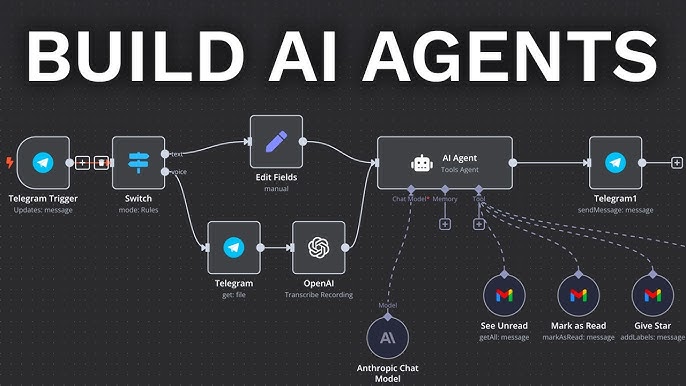
AI agents are more advanced systems that can act autonomously to achieve specific goals. They can plan, make decisions, interact with environments, and execute tasks without continuous human intervention.
Key Characteristics of AI Agents:
- Goal-oriented: Work toward achieving defined objectives
- Autonomous: Operate with minimal human input
- Adaptive: Learn from interactions and improve over time
- Multi-step reasoning: Can break down complex problems into smaller tasks
Examples of AI Agents:
- Autonomous customer support systems
- Personal productivity assistants
- Trading bots in financial markets
- Smart home automation systems
Types of AI Agents
1. Simple Reflex Agents
- Act based on current input only
- No memory or learning capability
- Example: basic rule-based chatbots
2. Model-Based Agents
- Maintain internal state (memory)
- Use past data to make decisions
3. Goal-Based Agents
- Make decisions based on achieving specific goals
- Evaluate different paths to reach an outcome
4. Utility-Based Agents
- Optimize decisions based on a utility function (best outcome)
- Common in economics and optimization systems
5. Learning Agents
- Improve performance over time using data
- Use machine learning techniques
Key Features Comparison
| Feature | AI Tools | AI Agents |
|---|---|---|
| Autonomy | Low | High |
| User Interaction | Required | Minimal |
| Decision-Making | Limited | Advanced |
| Learning Ability | Optional / Limited | Strong (especially learning agents) |
| Task Complexity | Simple to Moderate | Moderate to Complex |
| Use Case | Assistance | Automation & Execution |
Technical Specifications Comparison
| Specification | AI Tools | AI Agents |
|---|---|---|
| Input Type | User prompts | Goals + environment data |
| Processing Style | Single-step or limited steps | Multi-step reasoning |
| Integration | APIs, standalone apps | Systems, workflows, ecosystems |
| Memory | Minimal or session-based | Persistent memory |
| Adaptability | Low to medium | High |
| Control | Fully user-controlled | Semi-autonomous or autonomous |
When to Use AI Tools vs AI Agents
- Use AI tools when you need:
- Fast assistance
- Content creation
- Coding help
- Data analysis
- Use AI agents when you need:
- Automation of workflows
- Decision-making systems
- Continuous task execution
- Intelligent assistants
Conclusion
AI tools and AI agents represent two important layers of artificial intelligence applications. AI tools are ideal for assisting humans in specific tasks, while AI agents go further by acting independently and solving complex problems. As AI technology continues to evolve, the line between tools and agents is becoming increasingly blurred, leading to more powerful and intelligent systems that combine the best of both worlds.