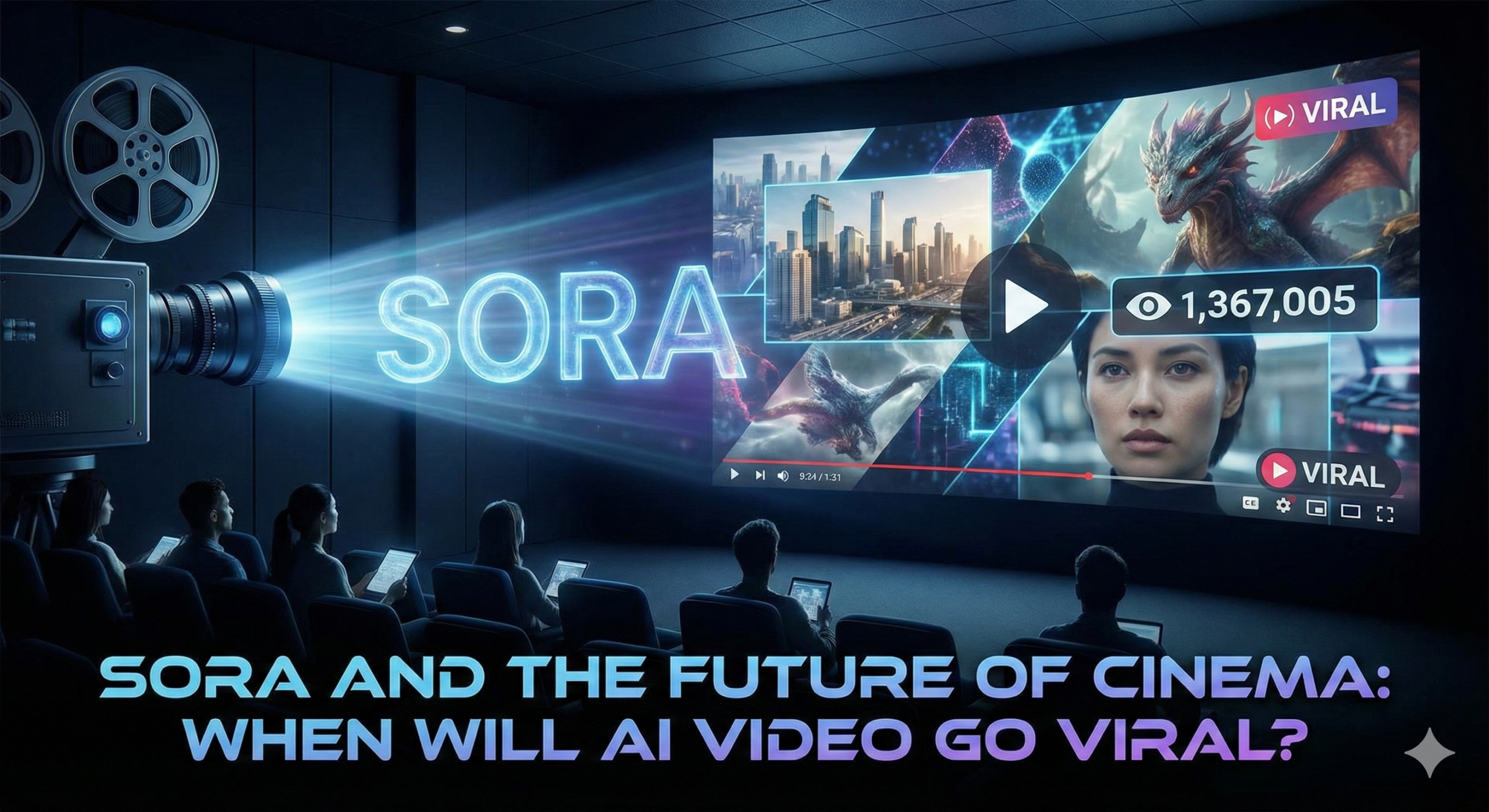
The traditional walls of Hollywood are beginning to dissolve as generative video technology reaches a critical tipping point. In 2026, the discussion has shifted from whether artificial intelligence can create art to how it will redefine the very fabric of storytelling. Sora and the Future of Cinema are now inextricably linked, promising a world where a single creator can produce a cinematic masterpiece from a bedroom office. This transition marks the most significant shift in filmmaking since the introduction of synchronized sound or the move from film to digital.
The Arrival of High-Fidelity AI Video
When OpenAI first unveiled Sora, the world witnessed a leap in generative physics that many thought was decades away. Unlike previous models that struggled with “hallucinations” and inconsistent character movements, Sora demonstrated a profound understanding of 3D space and temporal consistency. This capability is the cornerstone of Sora and the Future of Cinema, as it allows for the creation of complex scenes that feel grounded in reality.
The viral potential of AI video is no longer a question of “if” but “how.” We are already seeing short films and experimental trailers garnering millions of views on social platforms. These “viral moments” serve as proof of concept for a decentralized film industry where the barrier to entry is imagination rather than a multi-million dollar budget.
How Sora is Changing the Filmmaking Pipeline
Traditional filmmaking is a linear, expensive, and time-consuming process involving hundreds of specialized roles. Sora and the Future of Cinema offer a more iterative, fluid approach to creation. By integrating AI video into the pipeline, studios can bypass traditional bottlenecks in pre-production and visual effects.
Pre-Visualization and Storyboarding
Directors now use AI to generate “living storyboards.” Instead of static sketches, they can create 60-second clips that show exact camera angles, lighting moods, and character blocking. This saves weeks of guesswork and allows for better communication between departments.
Specialized Visual Effects (VFX)
In the past, creating a hyper-realistic explosion or a mythical creature required a team of artists months of work. With Sora, these assets can be generated and refined in a fraction of the time. This democratization of VFX means independent filmmakers can now achieve a “blockbuster look” on an indie budget.
Sora and the Future of Cinema: A New Business Model
The economic impact of AI on the movie industry is profound. We are moving toward a “Prosumer” era where the distinction between a professional studio and a high-end consumer is blurred. The following table compares the traditional cinematic approach with the emerging AI-integrated model.
Comparison: Traditional vs. AI-Assisted Filmmaking
| Feature | Traditional Cinema | AI-Integrated (Sora) |
| Pre-Production | Months of sketching & planning | Days of generative iteration |
| Principal Photography | Large crews, physical locations | Small crews, virtual environments |
| VFX Costs | Millions of dollars | Subscription-based / Computational |
| Turnaround Time | 12 – 24 months | 3 – 6 months |
| Barrier to Entry | Extremely High | Low to Moderate |
When Will AI Video Truly Go Viral?
For AI video to go viral in a way that impacts mainstream culture, it must move beyond “tech demos” and into “story-driven content.” The initial novelty of seeing a photorealistic cat or a futuristic city wears off quickly. Viral success in Sora and the Future of Cinema will come when the technology becomes invisible, and the audience is moved by the narrative.
We are currently seeing the rise of “AI-Native” creators—filmmakers who don’t just use AI to fix shots but build their entire aesthetic around its capabilities. When the first AI-generated short film wins a major award at a festival like Sundance or SXSW, that is when the viral transition will be complete.
The Pros and Cons of AI in Cinema
As with any disruptive technology, the rise of Sora and the Future of Cinema brings both immense opportunity and significant challenges.
The Advantages (Pros)
- Infinite Creativity: There are no “impossible shots” when the laws of physics can be simulated by a model.
- Inclusion: Creators from underrepresented backgrounds who lack access to traditional funding can now tell their stories.
- Niche Content: Small fanbases can have high-quality content produced specifically for them without the need for mass-market appeal.
The Challenges (Cons)
- Job Displacement: Roles in traditional VFX, set design, and even background acting are under threat.
- Deepfakes and Ethics: The ability to generate realistic humans raises serious concerns regarding consent and misinformation.
- Artistic “Soul”: Critics argue that AI-generated imagery lacks the intentionality and emotional depth of human-captured film.
Strategic Guidance for Aspiring AI Filmmakers
If you are looking to leverage Sora and the Future of Cinema in your own creative journey, the key is to view AI as a tool, not a replacement. The most successful viral videos of 2026 are those that combine human direction with AI’s generative power.
- Focus on Prompt Engineering: As discussed in our previous guide on Prompt Engineering 101, the quality of your video depends on the precision of your text.
- Hybrid Workflows: Use AI for the backgrounds and complex VFX, but consider using real actors for close-up emotional beats.
- Iterate Constantly: AI allows you to fail fast. If a scene isn’t working, re-generate and try a different stylistic direction immediately.
Conclusion
The intersection of Sora and the Future of Cinema represents a brave new world for storytellers. While the industry is currently in a state of flux, the potential for viral, high-quality content has never been higher. AI is not going to kill cinema; it is going to expand it, allowing for new voices, new worlds, and new ways of experiencing the human condition.
The viral moment is happening right now, one frame at a time. Whether you are a fan of traditional movies or a tech-forward creator, the screen is about to get a lot more interesting.